
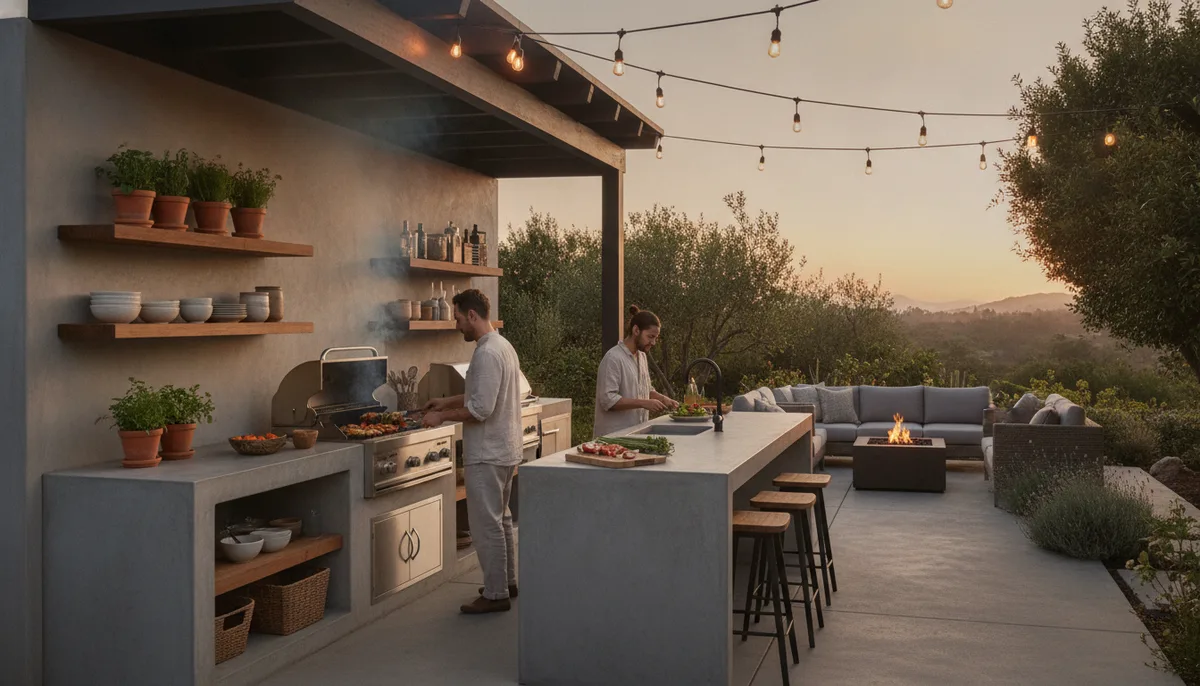
Beat the Heat: Why Moving Your Kitchen Outside is the Ultimate Summer Home Hack
For many homeowners, the kitchen is the heart of the home. But during a relentless summer heat wave, that heart can quickly become a furnace. When the mercury rises outside, the last thing any resident wants is to add fuel to the fire—quite literally—by boiling water for pasta or preheating an oven to 400 degrees.
The tipping point often comes during a seemingly simple meal. Imagine the scene: steam rising from a pot of noodles, the radiant heat of a cast-iron skillet searing protein, and the heavy outflow of warmth every time the oven door opens. In a well-insulated modern home, or a high-altitude residence where air conditioning is often an afterthought, this culinary heat can linger for hours, forcing AC units to chug along noisily well into the night.
Moving your kitchen operations outdoors isn't just about "grilling out"; it is a strategic lifestyle shift that protects your indoor sanctuary from the seasonal elements.
The Thermal Impact: Why Your AC is Losing the Battle
Most homeowners underestimate the sheer volume of British Thermal Units (BTUs) a standard kitchen releases into a living space. A single gas burner can put out between 7,000 and 15,000 BTUs per hour. When you factor in an oven, you are essentially competing against your own cooling system.
During a heat wave, your air conditioner is already working at maximum capacity to combat the ambient temperature infiltrating through walls and windows. When you introduce internal heat sources like a stove, you create a "heat stack" effect. The AC must not only cool the house but also neutralize the localized heat you’ve just manufactured. By moving the "galley" outside, you stop the problem at the source. This transition allows your indoor environment to remain a true refuge, maintaining a stable temperature without the spikes that lead to uncomfortable sleep and sky-high utility bills.
Designing Your Temporary Outdoor Galley
You don’t need a five-figure built-in masonry kitchen to reap the benefits of outdoor cooking. A functional, temporary setup can be assembled with items you likely already own or can acquire for a modest investment.
The Heat Source
A reliable heat source is the foundation of your setup. While many rely on a standard barbecue grill, a two-burner propane camp stove offers more versatility for daily meals. If you are looking for more precision, consider a portable induction burner. These are particularly effective because they don't use an open flame, making them safer in breezy conditions and incredibly efficient at boiling water.
HIGH POWER Portable Induction Co...
The Prep and Staging Area
A common mistake in outdoor cooking is a lack of workspace. A folding aluminum camping table or a sturdy potting bench can serve as your "countertop." This is where you’ll chop vegetables, season meats, and stage your ingredients. Having a dedicated surface prevents the frustration of balancing plates on the edge of a grill.
The "Oven" Alternative
Don't overlook your propane grill's potential as an oven. By using indirect heat (turning on only one side of the burners and placing food on the other), you can bake bread, roast vegetables, or keep side dishes warm. For those who prefer a more specialized approach, a high-quality electric grill can provide a sear that rivals indoor stovetops without the smoke.
Navigating the Logistics of Al Fresco Cooking
Moving your cooking routine outside requires a shift in habits. The primary challenge is the "forgotten ingredient" syndrome—the inevitable realization that the cumin is still in the pantry while the onions are already sizzling.
To mitigate this, adopt a strict mise en place philosophy. Prepare every ingredient, sauce, and utensil inside the house and transport them to the outdoor station in a single trip using a large tray or a rolling cart. This is also an excellent time to evaluate your kitchenware. For instance, transitioning to more sustainable materials can improve the experience. You might find useful tips in our The Low-Cost Guide to a Plastic-Free Kitchen: Protecting Your Family from Microplastics to ensure your outdoor gear is as healthy as it is convenient.
Dealing with the Elements
Unlike your indoor kitchen, the outdoors is a dynamic environment. You must account for:
- Wind: Wind can blow out camp stove flames or significantly increase cook times. Position your setup behind a natural windbreak or use a stove with integrated wind guards.
- Dust and Debris: A sudden "dust devil" can ruin a meal. Always use lids on your pots and pans. This not only keeps out debris but also retains heat, making your cooking more energy-efficient.
- Pests: From sugar ants to curious birds, your food is an invitation. Keep your prep area clean and never leave food unattended.
Beyond the Thermostat: The Hidden Benefits
While the primary goal is temperature control, homeowners often find that cooking outside offers several unexpected advantages.
Improved Indoor Air Quality
Searing steaks or flash-frying tofu often results in smoke and aerosolized grease that can linger in carpets and upholstery. Even the best range hoods struggle to capture 100% of these particulates. Cooking outside ensures that smoke and pungent odors (like those from hot peppers or fish) dissipate into the open air rather than settling in your living room.
Mental Well-being
There is a documented psychological benefit to spending time outdoors. Transitioning your dinner prep from a cramped kitchen to a deck or patio allows you to engage with your environment. Watching the local bird population or enjoying the shifting colors of a summer sunset can turn a daily chore into a meditative experience. If you’ve timed your outdoor kitchen setup with the seasons, you might even be enjoying the view of your late-summer blooms. For more on how the seasons affect your outdoor experience, see our 2026 Fall Foliage Forecast: Why Your Autumn Colors May Look Different This Year.
Essential Gear for the Outdoor Chef
If you are committing to a summer of outdoor cooking, investing in a few key pieces of equipment will make the process seamless.
- High-Output Camp Stove: Look for models that offer fine-tuned flame control. Many entry-level stoves are either "off" or "blowtorch." A model designed for simmering is essential for delicate sauces.
- Cast Iron Cookware: Cast iron is the king of the outdoor kitchen. It retains heat exceptionally well, is virtually indestructible, and can transition from a camp stove to a grill or even an open fire.
- Lighting: Don't forget that the sun sets. A high-quality LED lantern or string lights can ensure you aren't flipping burgers in the dark.
Integrating Your Kitchen with Your Landscape
For those who find they prefer the outdoor lifestyle, a temporary setup can be the first step toward a more permanent outdoor living space. Consider the proximity of your outdoor kitchen to your garden. Having fresh herbs or vegetables within arm's reach of your prep station is the pinnacle of the "farm-to-table" experience.
If you are planning to expand your outdoor capabilities, think about your garden's layout. A well-placed raised bed can provide the aromatics you need for summer grilling. For inspiration on organizing your outdoor space, check out our guide on how to Maximize Your Harvest: The Essential Guide to Designing a Productive Raised Bed Garden Layout.
Conclusion: A Seasonal Shift Worth Making
The hassles of cooking outside—the extra trips for a forgotten fork or the occasional battle with a breeze—are small prices to pay for a cool, comfortable home. By reclaiming your indoor space from the heat of the stove, you extend the life of your HVAC system, lower your energy bills, and discover a new way to enjoy your property.
As the heat waves of the mid-2020s become more frequent, the "outdoor galley" is no longer just for camping; it is a smart, sustainable way to manage a modern home. So, the next time the forecast calls for triple digits, leave the oven off, grab your cast iron, and head for the patio. Your thermostat—and your family—will thank you.