
Citric Acid: The Professional Secret to a Limescale-Free Home
Maintaining a home involves more than just aesthetic upgrades; it requires a consistent strategy for preserving the functional integrity of your appliances and fixtures. For homeowners in regions with hard water, the primary antagonist is often limescale—that stubborn, white, crusty mineral buildup that dulls faucets and slows down kettles. While many reach for harsh chemical sprays, professional cleaners are increasingly turning to a versatile, eco-friendly alternative: citric acid.
Citric acid is a naturally occurring organic acid found in citrus fruits, but in its concentrated powder or crystalline form, it becomes a potent descaling agent. Popular across Europe for decades, it is now gaining significant traction in North America as a staple for high-end home maintenance. Whether you are preparing your property for the market or simply looking to extend the life of your kitchen gadgets, understanding how to harness this all-natural powder is a game-changer.
The Science of Why Citric Acid Works
To use citric acid effectively, it helps to understand why it is so successful at tackling mineral deposits. Hard water contains high concentrations of calcium and magnesium. When this water is heated or left to evaporate, these minerals solidify, creating the chalky residue known as limescale.
Citric acid acts as a chelating agent. This means it chemically "grabs" onto the metal ions in the mineral deposits, breaking them down and making them water-soluble so they can be easily rinsed away. Unlike vinegar, which has a pungent odor that can linger in a kitchen, citric acid is virtually odorless and provides a higher level of acidity in a more stable, concentrated form.
Incorporating citric acid into your routine is also a significant step toward a more sustainable household. By purchasing the powder in bulk, you can reduce your reliance on single-use plastic bottles filled with water-based cleaning solutions. For those interested in further reducing their environmental footprint, our The Low-Cost Guide to a Plastic-Free Kitchen: Protecting Your Family from Microplastics offers additional strategies for a cleaner, safer home environment.
Revitalizing Kitchen Appliances: Kettles and Coffee Makers
The most immediate impact of citric acid is often felt in the morning routine. Coffee makers and electric kettles are highly susceptible to scale because they heat water repeatedly. Over time, this buildup can clog internal tubes, reduce heating efficiency, and even affect the flavor of your beverages.
Descaling an Electric Kettle
An electric kettle can go from crusty to brand new in less than twenty minutes. To descale, fill the kettle with water and add one to two tablespoons of citric acid powder. Bring the water to a boil, then turn off the heat and let it simmer or sit for 15 to 20 minutes. The acidity will dissolve the white rings at the bottom of the unit. As expert Enrique Gonzalez of Seattle Green Cleaning Fairy notes, once the time is up, you should empty and rinse the kettle, then boil a fresh batch of plain water and discard it to ensure no acidic residue remains.
Restoring Coffee Makers
For traditional drip coffee makers, the process is similarly straightforward. Gonzalez recommends adding one to two tablespoons of citric acid to a full tank of water. Run one full brewing cycle with the solution, followed by two cycles of plain, clean water. This ensures the internal heating element is cleared of minerals, which can actually help the machine run quieter and brew hotter.
Bathroom Brilliance: Faucets and Showerheads
In the bathroom, hard water stains can make even the most expensive fixtures look neglected. This is particularly important when Mastering the Open House: A Strategic Guide for Buyers, Sellers, and Real Estate Professionals, as sparkling clean bathrooms are a major selling point.
Faucets and Tap Hardware
To remove spots from faucets, mix a simple solution of one to two teaspoons of citric acid in one cup of warm water. Sofia Martinez, owner of Sparkly Maid Austin, suggests applying this with a soft, damp cloth. Let the solution sit on the metal for three to five minutes—enough time to break down the minerals but not long enough to risk damaging the finish. Always dry the fixture immediately after rinsing to prevent new water spots from forming.
Deep Cleaning Showerheads
If your showerhead has uneven water pressure or clogged spray holes, mineral buildup is the likely culprit. Martinez recommends dissolving a tablespoon of citric acid in two cups of warm water and soaking the showerhead in this solution. If the showerhead is fixed, you can pour the solution into a plastic bag and secure it around the head with a rubber band. After soaking, rinse with clean water and run the hot water for a minute to flush out any loosened deposits.
Tackling Glass and Stainless Steel
Glass shower doors and stainless steel sinks are notorious for showing every single water droplet. Citric acid is an excellent "shiner" for these surfaces because it removes the film that traps dirt.
Glass Shower Doors
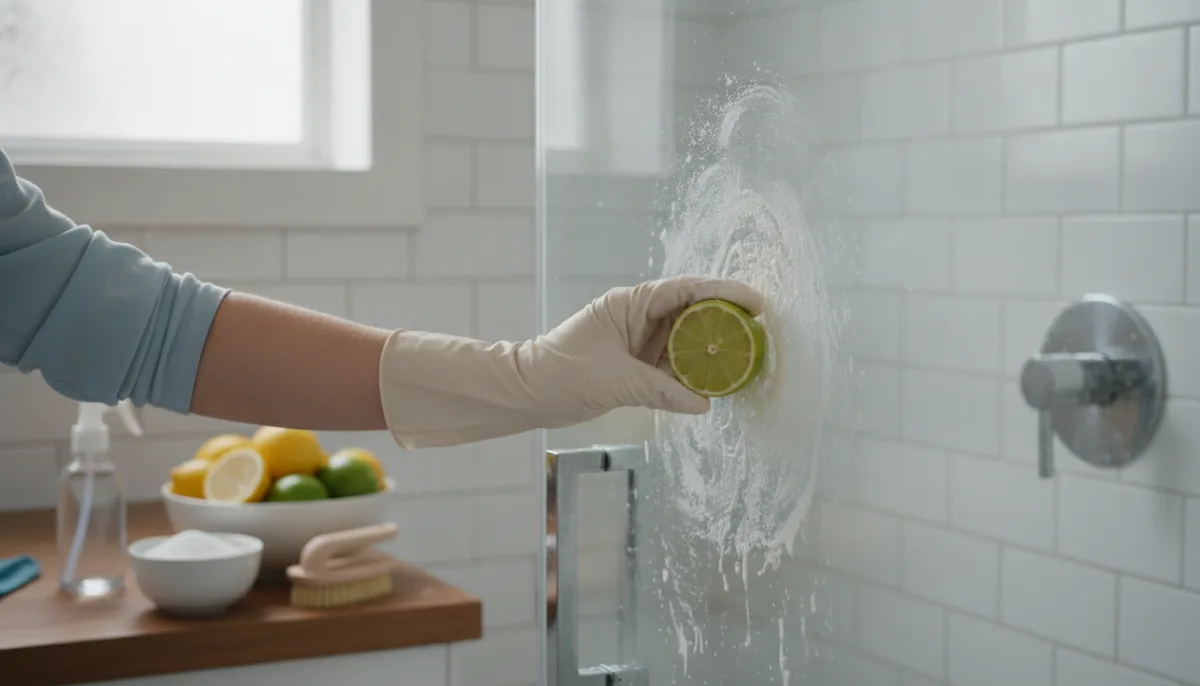
For those stubborn, cloudy spots on glass, create a spray by mixing one tablespoon of citric acid with two cups of warm water. Spray the solution onto the glass and allow it to sit for up to five minutes. It is crucial not to let the solution dry on the glass, as this can leave its own residue. Wipe the surface with a nonabrasive rag or sponge. For a professional, streak-free finish, use a squeegee immediately after rinsing.
Stainless Steel Sinks
Citric acid can "shine up stainless-steel sinks" by removing the dulling detergent film and light limescale. A light scrub with a citric acid solution and a microfiber cloth can restore the reflective quality of the metal, making the entire kitchen feel cleaner.
The Dishwasher Reset
Dishwashers often suffer from a "double whammy" of hard water stains and soap scum. If your dishes are coming out cloudy, the machine itself likely needs a citric acid treatment.
Enrique Gonzalez suggests a two-step approach. First, clean the manual filter at the bottom of the tub to remove food debris. Then, place a couple of tablespoons of citric acid in a small bowl and set it upright on the top rack of an otherwise empty dishwasher. Run a standard hot cycle. The citric acid will be distributed throughout the machine, clearing out the spray arms and dissolving the film on the interior walls.
Safety Precautions and Surface Sensitivity
While citric acid is a "superpower" for cleaning, its acidic nature means it isn't suitable for every surface.
- Avoid Natural Stone: Never use citric acid on marble, granite, or limestone. The acid will react with the calcium carbonate in the stone, leading to permanent etching or dull spots.
- Metal Finishes: While great for stainless steel and chrome, some modern "specialty" finishes (like certain matte blacks or oil-rubbed bronzes) can be sensitive. Always consult the manufacturer's guidelines and test a hidden spot first.
- Dwell Time: Do not let citric acid solutions sit indefinitely. In most cases, five to ten minutes is more than enough time for the chemistry to work.
- Rinsing: Citric acid is an acid; always rinse the surface thoroughly with plain water after cleaning to neutralize the pH.
Conclusion: A Staple for the Modern Home
Citric acid offers a rare combination of efficacy, safety, and affordability. By moving away from complex, multi-ingredient chemical cleaners and toward simple, targeted solutions like citric acid, you can maintain a healthier home and more efficient appliances. Whether you are descaling a kettle or polishing a shower door, this natural powder provides professional-grade results with minimal effort.
As you look for ways to enhance your home's longevity and appeal—perhaps while planning your next Raised Bed Garden Layout or preparing for a seasonal transition—remember that the best maintenance tools are often the simplest ones found in nature. High-quality home care doesn't have to be expensive; it just has to be smart.