
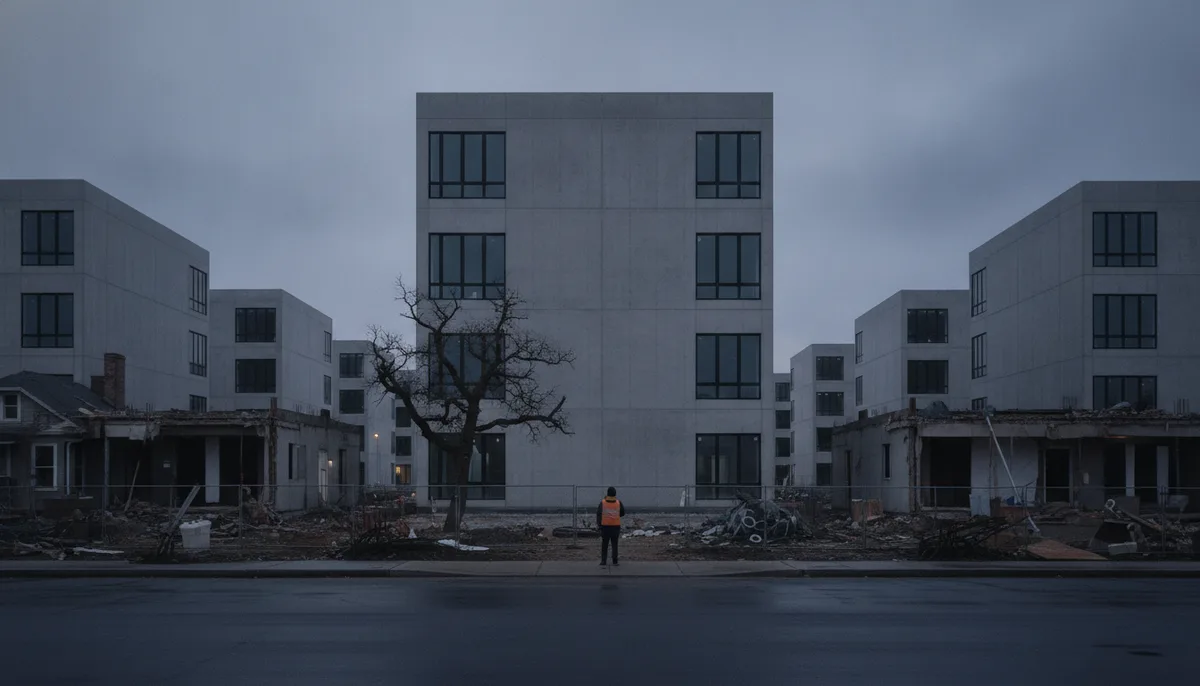
The Rise of the Monster Home: Navigating the Era of Urban Teardowns and Architectural Homogeneity
The Changing Face of the American Neighborhood
If you have spent any time walking or cycling through established residential areas lately, you have likely witnessed a startling transformation. What was once a row of modest, mid-century ranch houses—tidy, horizontal, and nestled behind mature trees—is increasingly interrupted by what critics and locals have dubbed "Monster Homes."
These structures seem to appear almost overnight. One week, a '60s rambler sits quietly on its lot; the next, a roll-off dumpster and a bulldozer have cleared the way for a massive, multi-story frame that stretches toward every property line. For many residents, this isn't just a change in scenery; it’s a fundamental shift in the "feel" of their community.
In cities like Dallas, which has a long-standing reputation as a "teardown town," this trend is reaching a fever pitch. From the destruction of historic Brutalist landmarks to the quiet erasure of suburban-style pockets within the city limits, the landscape is being rewritten. But why is this happening now, and what does it mean for the future of our neighborhoods?
The Mechanics of the Teardown: Why Infill is King
The primary driver behind the rise of the monster home is a simple lack of space. In desirable urban centers, there is very little "virgin" land left to develop. If a buyer wants a brand-new home with modern amenities but refuses to commute from the distant fringes of the metroplex, they must look inward.
According to data from the National Association of Home Builders (NAHB), nearly a quarter of all new home construction in 2024 was categorized as either a teardown or infill development. Infill development refers to building on underutilized lots within an already established area.
For many, the math is straightforward. A modest home on a large, well-located lot is often worth more as a "dirt value" proposition than as a residence. When the cost of renovating a 1,500-square-foot house with outdated plumbing and electrical exceeds the cost of starting over, the bulldozer becomes the most viable financial tool. As you prepare for the changing market, Mastering the Open House: A Strategic Guide for Buyers, Sellers, and Real Estate Professionals can help you understand how these new builds are marketed and sold.
The Aesthetic of the "Big White House"
One of the most jarring aspects of the monster home trend is the architectural homogeneity. Whether you are in Dallas, Atlanta, or Denver, the new builds tend to follow a very specific, limited script.
The Modern Farmhouse
Heavily popularized by Texas-based designers Chip and Joanna Gaines, the "Modern Farmhouse" has become the default setting for many developers. Characteristics include:
- Stark white or off-white siding (rarely a splash of color).
- Black-trimmed windows.
- Gabled roofs with metal accents.
- A "deliberately inoffensive" quality designed for maximum resale value.
The Boxy Contemporary
On the other end of the spectrum is the stark, boxy contemporary. These homes prioritize glass, steel, and right angles. While architecturally striking in isolation, they often feel "stuffed" onto modest city lots. Without the breathing room of a larger estate, these 5,000-square-foot giants can look less like a home and more like an industrial office building that took a wrong turn into a residential cul-de-sac.
The lack of color and the repetitive nature of these designs lead to a phenomenon where neighborhoods lose their unique thumbprint. Instead of a collection of homes built over decades, the street begins to look like a high-end tract-house development, despite being in the heart of an old city.
The Neighborly Friction: Privacy and Sunlight
The transition from a 1,200-square-foot ranch to a 4,500-square-foot "monster" isn't just an aesthetic issue; it’s a functional one for the people living next door. When a house maximizes its footprint, it often stretches to the very limits of local setback ordinances.
The result is a "looming" effect. Neighbors who once enjoyed sun-drenched backyards may suddenly find themselves living in a permanent eclipse. This loss of sunlight doesn't just affect human mood; it can be devastating for local flora. If you find your long-established garden struggling under the shadow of a new neighbor, you may need to pivot your strategy. Check out our guide on how to Maximize Your Harvest: The Essential Guide to Designing a Productive Raised Bed Garden Layout to adapt your planting to changing light conditions.
Furthermore, the "monster" often features second-story windows that look directly down into the neighboring yards. The privacy once provided by a simple wooden fence or a few crepe myrtles is evaporated. In many cases, the developer removes those very trees to make room for the slab, leaving the existing neighbors feeling exposed.
Balancing Urban Density and Character
There is a counter-argument to the "monster home" frustration: urban density. As cities grow, we need more housing. Replacing a single-family home that housed two people with a larger home that might house a family of six—or perhaps a duplex or townhome—is a form of densification.
However, the "monster home" is often a missed opportunity for true density. Frequently, these are still single-family residences; they are simply larger and more expensive. They don't necessarily provide more housing units; they provide more house for the same number of units.
The challenge for city planners and neighborhood associations is to find a middle ground. Some cities have begun implementing "mansionization" ordinances, which limit the height and bulk of new constructions relative to the lot size and the average height of surrounding homes. These regulations aim to ensure that while a neighborhood can modernize, it doesn't lose the scale that made it desirable in the first place.
Living with the Change: A Practical Approach
If you live in a neighborhood currently undergoing this "turnover," or if you are considering buying one of these new builds, there are ways to mitigate the impact and foster community.
- For the Neighbors: If a new build is going up next door, check the city permits and setback requirements early. If you lose your privacy, consider fast-growing upright evergreens or privacy screens rather than traditional fencing alone.
- For the Builders/Buyers: Consider the "streetscape." A house doesn't have to be small, but it should respect the rhythm of the street. Adding a splash of color, preserving mature trees on the property line, or stepping the second story back from the neighbors can go a long way in building goodwill.
- For the Community: Engage with local zoning boards. Many "monster home" issues arise because outdated zoning hasn't kept up with modern building trends.
Conclusion: The Evolution of the "Hood"
The "Big White House" trend is a symptom of a growing, changing society. While the sight of a bulldozer can be painful for those who love the history of their neighborhood, it is also a sign of investment and vitality. The goal for the future of our cities shouldn't be to stop change, but to manage it with a sense of proportion and respect for the existing fabric of the community.
Whether you are a fan of the modern farmhouse or a defender of the mid-century ranch, one thing is certain: the face of the American neighborhood is shifting, one lot at a time. By understanding the forces at play, we can better advocate for neighborhoods that are not only dense and modern but also vibrant and diverse.