
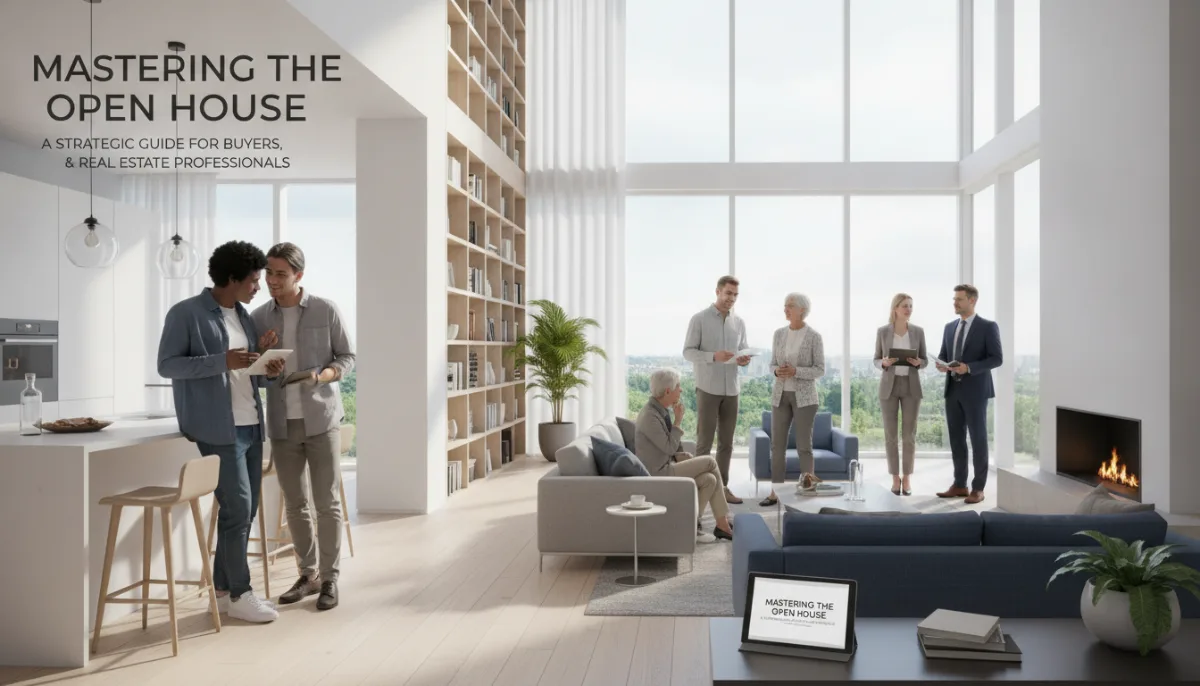
Mastering the Open House: A Strategic Guide for Buyers, Sellers, and Real Estate Professionals
The Evolution of the Open House: More Than Just a Walkthrough
In an era dominated by high-definition 3D tours and drone photography, the traditional open house remains a cornerstone of the real estate industry. While the digital "first showing" happens on a smartphone screen, the physical open house serves a much deeper psychological and strategic purpose. It is the bridge between digital interest and a formal offer.
For sellers, the open house is an opportunity to create a sense of urgency and competition. For buyers, it is a low-pressure environment to vet a property without the formality of a private showing. However, the difference between a successful event and a wasted afternoon lies in the details. To master the open house, one must understand the intersection of sensory marketing, buyer psychology, and logistical precision.
The Psychology of the Open House: Creating the "Social Proof" Effect
One of the most powerful aspects of an open house is a psychological phenomenon known as social proof. When a prospective buyer enters a home and sees three other couples discussing the kitchen layout or admiring the backyard, the perceived value of the property rises.
Unlike a private showing, where a buyer might feel they have all the time in the world to negotiate, an open house signals that they are not the only interested party. This environment fosters a "fear of missing out" (FOMO), which can lead to faster offers and, in many cases, bidding wars.
To maximize this effect, real estate professionals often schedule open houses during peak hours to ensure a steady flow of foot traffic. The goal is to make the house feel like a "hot commodity."
The Seller’s Strategy: Staging for the Senses
Successful sellers know that an open house is not just about showing a floor plan; it is about selling a lifestyle. Preparation goes far beyond a quick vacuum and dusting.
Sensory Marketing and Atmosphere
The human brain processes environments through all five senses. When a buyer walks through the door, they should be greeted by a space that feels fresh, bright, and inviting.
- Sight: Maximize natural light by opening all curtains and blinds. Replace any burnt-out bulbs with high-lumen, "soft white" LED bulbs to make rooms feel larger.
- Smell: Avoid heavy air fresheners or "baked cookie" cliches, which can sometimes signal that you are hiding a musty odor. Instead, aim for a "clean" scent—think citrus or light eucalyptus.
- Sound: Soft, lyric-less background music (like ambient jazz or lo-fi beats) can mask street noise and prevent the house from feeling awkwardly silent when only one or two people are inside.
Decluttering and Depersonalizing
The objective is for the buyer to project their own life onto the space. This is difficult to do when they are looking at your family vacation photos or your collection of vintage ceramics. Clear the kitchen counters of small appliances and ensure all closets are only 50-60% full to suggest ample storage space.
The Buyer’s Playbook: Navigating the Event with Purpose
For a buyer, an open house is a fact-finding mission. It is easy to get distracted by beautiful furniture or a trendy backsplash, but a savvy buyer looks past the "lipstick" to evaluate the home’s integrity.
The 10-Point Inspection Checklist
While you aren't a licensed home inspector, you should keep an eye out for these red flags:
- Water Stains: Check ceilings and the areas under kitchen and bathroom sinks.
- Foundation Cracks: Look at the exterior corners of the house and the basement walls.
- Roof Condition: Do the shingles look curled or mossy?
- Windows: Are they double-paned? Is there fogging between the glass (indicating a broken seal)?
- Electrical Panel: Does it look modern, or is it an outdated fuse box?
- Floor Levelness: Does the floor feel sloped or "bouncy" in certain areas?
- Odors: Is there a faint scent of mold, pet urine, or cigarette smoke?
- Neighborhood Context: Are the neighboring houses well-maintained? Is there a noisy commercial property nearby?
- Storage: Open the pantry and the master closet. Is it actually enough for your needs?
- The "Bones": Note the age of the water heater and the HVAC unit, usually found on a sticker on the units themselves.
Open House Etiquette and Strategy
Always sign in. It builds rapport with the listing agent, who may have "pocket listings" or inside information on upcoming properties. However, be careful with your dialogue. Avoid expressing extreme excitement or revealing your maximum budget within earshot of the listing agent, as their primary fiduciary duty is to the seller.
Security and Safety: Protecting the Asset
Opening a home to the public carries inherent risks. Both agents and sellers must prioritize security to ensure the experience remains positive.
For the Seller
Before the first visitor arrives, secure all valuables. This includes:
- Prescription Medications: These are the most commonly stolen items at open houses. Lock them in a travel safe or take them with you.
- Small Electronics and Jewelry: Clear out bedside drawers and vanity tops.
- Financial Documents: Ensure no bank statements, mail, or tax returns are visible in home offices.
For the Agent
Safety is paramount. Agents should always let someone know where they are and consider using a safety app. It is also wise to position yourself so you are never "trapped" in a room; always stay between the visitors and the exit.
Digital Integration: The Modern Open House
The most successful open houses today are "hybrid" events. They leverage digital tools to capture leads and provide a richer experience for the visitor.
QR Codes and Digital Sign-In
Gone are the days of illegible handwriting on a paper sign-in sheet. Modern agents use QR codes placed strategically throughout the home. A QR code on the kitchen island might link to a digital "Home Features" sheet, while one in the backyard could link to a video of the neighborhood amenities.
Social Media Live Streams
A "Live" walkthrough on Instagram or Facebook 15 minutes before the official start time can generate last-minute traffic. It allows remote buyers to ask questions in real-time and creates a "buzz" that translates into physical foot traffic.
Turning Visitors into Offers: The Follow-Up Strategy
The work doesn't end when the "Open House" sign is packed into the trunk. The 24 hours following the event are the most critical.
For agents, the follow-up should be tiered:
- The "Hot" Leads: Those who asked about the age of the roof or requested a disclosure packet should receive a phone call within two hours of the event closing.
- The "Warm" Leads: Those who spent a significant amount of time in the house but didn't ask specific questions should receive a personalized text or email.
- The General Visitors: Everyone else should be added to a weekly market update drip campaign.
For sellers, the post-open house period is a time for reflection. Ask your agent for the "raw" feedback. If ten people mentioned the carpet in the living room was a deterrent, it might be time to offer a flooring credit or replace it before the next showing.
Conclusion: The Enduring Value of the Open House
Despite the rise of virtual reality and AI-driven real estate platforms, the open house remains a vital tool in the property market. It provides a tactile, emotional experience that a screen simply cannot offer. By approaching the event with a strategic mindset—focusing on sensory staging, rigorous buyer vetting, and digital integration—you turn a routine event into a powerful catalyst for a successful sale.
Whether you are a seller looking to exit your investment or a buyer searching for a place to call home, the open house is your best opportunity to see the market in motion. Treat it with the preparation and respect it deserves, and the results will follow.