
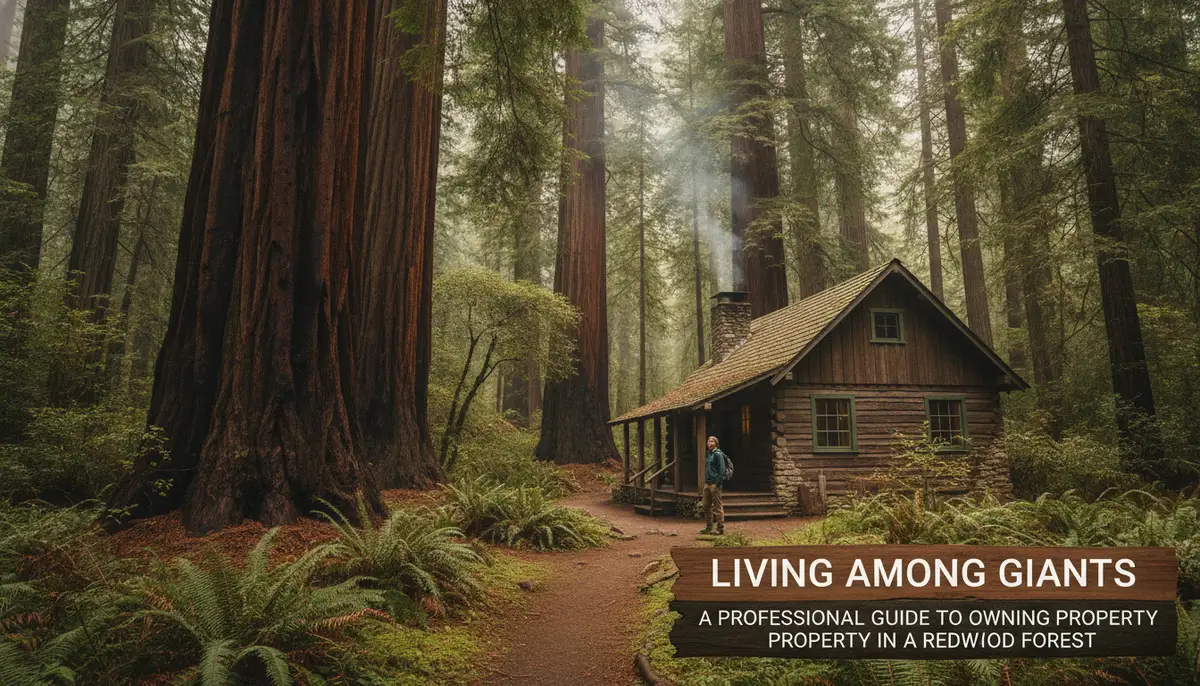
Living Among Giants: A Professional Guide to Owning Property in a Redwood Forest
Living in a redwood forest is a dream for many who seek a connection with the ancient, majestic beauty of the California coast. For those who trade the suburban sprawl for the mountains of Santa Cruz County or the misty reaches of the Pacific Northwest, the experience is often described as living within a natural cathedral. However, the reality of owning property among Sequoia sempervirens—the Coastal Redwood—is a complex balance of awe-inspiring views and rigorous property management.
As a property owner in these regions, you aren't just a resident; you are a steward of an ecosystem that has survived for millennia. Understanding the biological, regulatory, and safety requirements of this environment is essential for any homeowner or prospective buyer.
The Anatomy of a Redwood Property: Understanding Fairy Circles
One of the first things a new forest resident notices is that redwoods rarely grow in isolation. Instead, they form what locals call "fairy circles." These are clumps of trees that sprout from the root system of a central "mother" tree. While these formations create a stunning, secluded atmosphere, they present unique challenges for land use.
Because these trees share a shallow but incredibly wide-reaching root system, the health of one tree is often tied to the health of the entire clump. When assessing a property, it is vital to look at the density of these circles. Overcrowded clumps can lead to stunted growth and an increased accumulation of dry, dead lower branches.
Managing these spaces often requires thinning to promote a healthier forest floor, a task that is aesthetically pleasing but logistically demanding. If you are currently evaluating a property with dense forest cover, it is wise to consult with experts who understand the long-term growth patterns of these giants. For more on evaluating unique properties, see our guide on Mastering the Open House: A Strategic Guide for Buyers, Sellers, and Real Estate Professionals.
The Risk of "Widowmakers" and Falling Treetops
The sheer scale of a redwood—reaching heights of several hundred feet—means that gravity is a constant factor in property maintenance. The term "widowmaker" is not used lightly in the forest. These are massive branches that, due to wind, age, or excessive weight, snap off from heights exceeding 100 feet.
Gravity and Terminal Velocity
A branch falling from the top of a redwood can gain enough momentum to pierce through a roof or crush a vehicle. The danger isn't limited to branches; during high-wind events or atmospheric rivers, the tops of the trees themselves can snap.
Strategic Property Layout
To mitigate these risks, homeowners must adopt a "forest-first" mentality regarding infrastructure:
- Parking: Never park vehicles directly under the drip line of a redwood during storm season. Open clearings are the only safe zones for cars.
- Infrastructure Protection: Essential equipment, such as well pumps or external generators, should be housed under reinforced structures. A simple branch can take out your entire water supply if the pump is left exposed.
- Safe Zones: During gale-force winds, the safest place to be is inside, away from windows that face large timber.
Navigating the Regulatory Landscape: Heritage Tree Status
In many coastal California counties, the Coastal Redwood is protected under "heritage tree" ordinances. These regulations are designed to preserve the forest for future generations, but they can complicate the lives of property owners who need to manage hazardous timber.
The Permit Process
Removing a redwood is not as simple as hiring a tree service. The process typically involves:
- Arborist Assessment: A certified professional must evaluate the tree's health and potential risk.
- Public Notice: In many jurisdictions, you must post a public notice of your intent to remove a tree, allowing neighbors to weigh in.
- Permit Fees: The administrative costs alone can be substantial, often reaching thousands of dollars before a single cut is made.
Because of these hurdles, many homeowners find themselves living with trees that an official might recommend thinning but the law makes difficult to remove. This necessitates a proactive approach to maintenance—collecting and burning fallen debris during "burn season" to reduce fuel loads and maintain a clean forest floor.
The Microclimate Challenge: Shade, Moisture, and Mold
The very canopy that provides a cool, serene escape in the heat of July becomes a liability in the winter. Redwoods are masters of capturing moisture; they can actually "create" rain by stripping water from the coastal fog. While this is a botanical marvel, it creates a perennially damp environment for a home.
The Summer/Winter Dichotomy
In the summer, the redwood forest is a natural air conditioner. The temperature under the canopy can be 10 to 15 degrees cooler than in the open sun. However, in the winter, the lack of sunlight prevents the ground and the home's exterior from drying out.
Combating Mold and Mildew
The combination of shade and high rainfall often leads to mold issues on siding, decks, and even inside the home. Homeowners must be diligent about:
- Gutter Maintenance: Redwood needles are small and acidic; they can clog gutters quickly and lead to wood rot.
- Airflow: Ensuring that there is adequate space between the trees and the home's siding to allow for air circulation.
- Moisture Barriers: Using high-quality sealants on outdoor wooden structures.
For those looking to build or renovate in these damp conditions, choosing the right materials is paramount. You can find inspiration for durable outdoor builds in our article on From Grey Rock to Grand Entertaining: A Father-Son Guide to Building a DIY Trex Deck.
Living with Natural Disasters: Fire and Earthquakes
Redwoods are evolutionary survivors. Their thick, tannin-rich bark makes them incredibly resistant to fire, and their interconnected root systems provide stability during seismic events. However, the property around the trees is often more vulnerable than the trees themselves.
Fire Safety and Defensible Space
While the redwoods might survive a wildfire, the "duff" (the thick layer of needles and organic matter on the forest floor) is highly flammable when dry. Creating a defensible space involves clearing this debris at least 30 to 100 feet away from the home. This is a year-round job in a redwood forest, as the trees constantly shed needles and small twigs.
Seismic Stability
During the 1989 Loma Prieta earthquake, many redwood-heavy areas saw significant land movement. While the trees' roots help hold the soil together, the weight of the trees can actually contribute to landslides on steep slopes if the soil becomes oversaturated by excessive rainfall.
The Rewards of Forest Stewardship
Despite the "widowmakers," the permit headaches, and the winter dampness, few people who move to the redwood forest ever want to leave. There is a profound sense of peace that comes from living among organisms that have stood for a thousand years.
The key to a successful life in the forest is a shift in perspective. You are not the master of the land; you are a guest in a very old house. By respecting the power of the trees and staying ahead of the maintenance, you can enjoy the "natural cathedral" without falling victim to its dangers. For those interested in the philosophy of maintaining such a unique landscape, we recommend exploring Preservation with Purpose: Design Lessons from Pamela Anderson’s Garden of Eden.
Final Checklist for Redwood Property Owners:
- Annual Inspection: Hire an arborist every year to check for leaning trees or cracked "widowmaker" branches.
- Debris Management: Schedule "burn days" or debris hauling to keep the forest floor clear of fuel.
- Roof Care: Install "leaf guards" on gutters and clear the roof of needles monthly.
- Emergency Preparedness: Keep a backup power source and plenty of water, as falling trees frequently take out power lines and access roads.
Living among the giants is a commitment to a specific way of life—one defined by the rhythm of the seasons, the sound of the wind through the high canopy, and the enduring strength of the world's tallest trees.