
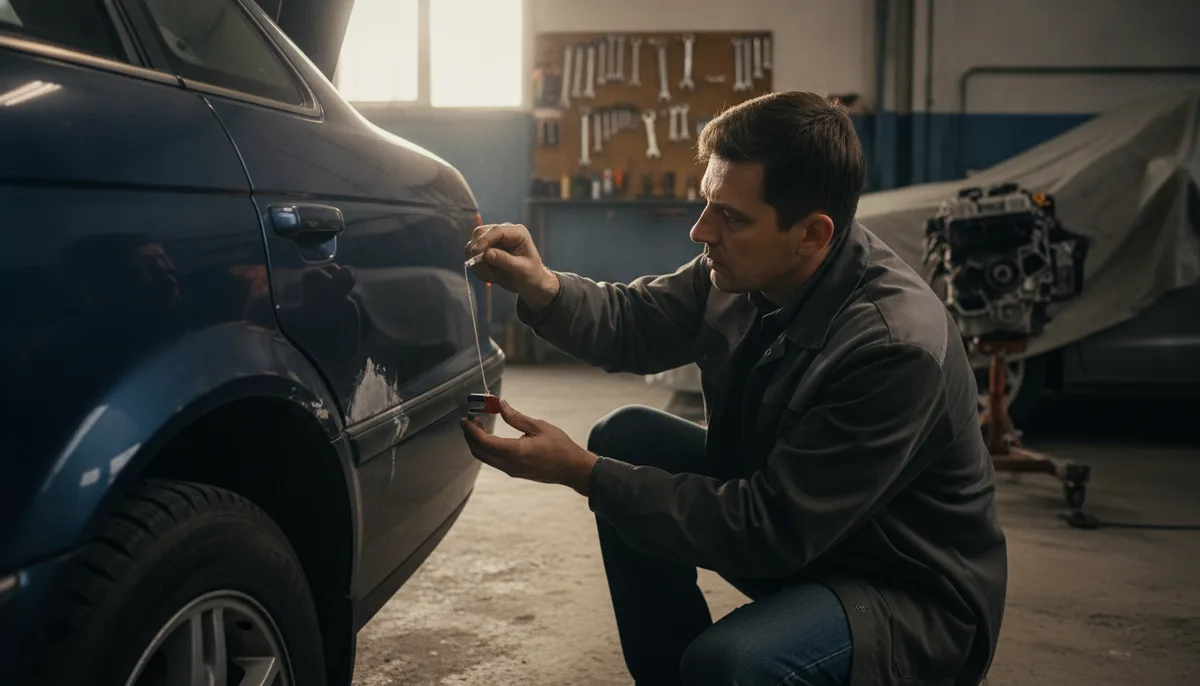
Beyond the Shine: Using the Magnet Test to Uncover Hidden Used Car Damage
Buying a used car is one of the most significant financial decisions a consumer makes, often second only to purchasing a home. Much like Mastering the Open House: A Strategic Guide for Buyers, Sellers, and Real Estate Professionals requires a keen eye for "staged" repairs in a property, shopping for a vehicle requires a healthy dose of skepticism.
A glistening exterior and a "low mileage" claim can easily mask a history of collisions and structural compromises. While modern body shops are incredibly skilled at making a wrecked car look brand new, they cannot change the fundamental physics of the materials they use. This is where a simple, low-tech tool—the magnet—becomes an essential part of your pre-purchase toolkit.
The Science Behind the Magnet Test
To understand why a magnet is useful, you first have to understand how cars are built and how they are repaired. For decades, the primary material for automotive body panels has been steel. Because steel is a ferromagnetic material, a magnet will naturally adhere to it with a consistent pull.
When a car is involved in an accident that results in dents or gashes, there are two ways to fix it: replace the entire panel or fill the depression. Replacing a panel is expensive and labor-intensive. Consequently, many sellers or low-budget repair shops opt for body filler, commonly known by the brand name Bondo®.
Body filler is a putty-like substance, often a polyester resin, that is applied to a dent, sanded down to match the vehicle's original contours, and then painted over. Because these fillers are not magnetic, they create a "barrier" between the magnet and the steel panel underneath. If the filler is thick enough, the magnet will either have a very weak attraction or fall off the car entirely.
How to Perform the Magnet Test Correctly
Performing this test isn't just about sticking a magnet to a door and walking away. It requires a systematic approach to ensure you are getting an accurate reading of the vehicle's history.
1. Choose the Right Tool
You don't need a heavy industrial magnet. In fact, a very strong magnet might scratch the paint or be difficult to move smoothly. A small, weak refrigerator magnet or a specialized automotive paint thickness gauge is often better because it is more sensitive to slight changes in the magnetic field.
2. Seek Permission and Ensure Cleanliness
Before you start sticking things to a stranger's car, always ask the seller for permission. Explain that you are checking for body filler. To protect the paint, ensure both the magnet and the car's surface are clean. A layer of grit or dirt between the magnet and the paint can cause micro-scratches that will frustrate the seller.
3. Test in "High-Impact" Zones
Focus your efforts on areas most prone to damage. This includes the lower sections of the doors, the wheel arches, the front fenders, and the rear quarter panels. These are the zones most likely to encounter shopping carts, other car doors, or side-impact collisions.
4. Compare Opposite Sides
Consistency is your best friend. If the magnet sticks firmly to the driver-side rear fender but feels "mushy" or falls off the passenger-side rear fender, you have found a likely repair site. Manufacturers build cars with symmetry; the magnetic pull should feel identical on both sides of the vehicle.
The Critical Limitations: When the Magnet "Lies"
While the magnet test is a fantastic preliminary screening tool, it is far from foolproof. Relying on it exclusively can lead to "false positives" where you think a car is damaged when it isn't, or "false negatives" where a car looks clean but has a hidden history.
The Rise of Non-Ferrous Materials
Modern automotive engineering is focused on weight reduction to improve fuel efficiency. This has led to an explosion in the use of aluminum, fiberglass, and high-strength plastics. For example, the Ford F-150 transitioned to an all-aluminum body years ago. If you take a magnet to a perfectly mint F-150, it won't stick anywhere on the exterior panels. This doesn't mean the truck is made of Bondo; it just means it isn't made of steel.
Replacement Panels
If a car was in a major accident but the insurance company paid for a full panel replacement, the magnet test will fail to find the damage. A brand-new steel fender will attract a magnet exactly like the original one did. In this scenario, the car has a "clean" magnetic profile but still has a history of significant collision.
Thin Layers of Filler
Skillful body technicians can use very thin layers of filler that may not completely block a magnet's pull. While a mechanic like Scotty Kilmer can often feel these subtle differences, an average shopper might miss them if the filler is applied sparingly.
Beyond the Magnet: Other Visual Cues to Watch For
Since the magnet has its limits, you should combine it with a visual inspection. Use the magnet to confirm suspicions, but use your eyes to find them first.
- Panel Gaps: Look at the spaces between the doors, the hood, and the fenders. On a factory-original car, these gaps are perfectly uniform. If a gap is wider at the top than at the bottom, or if a door sits slightly "proud" of the rest of the body, it’s a sign that the panels were removed and reinstalled—likely for a repair.
- Paint Overspray: Open the doors, the hood, and the trunk. Look at the rubber seals and the edges of the engine bay. If you see traces of paint on the rubber weatherstripping or on plastic components that shouldn't be painted, the car has been resprayed.
- The "Orange Peel" Effect: Look at the reflection of a straight light source (like a long fluorescent bulb) in the paint. Factory paint is usually very smooth. A repaired area often has a textured look, similar to the skin of an orange, which indicates a non-factory paint job.
The Role of Documentation and Professional Help
While a magnet can give you immediate feedback during a viewing, it is only one piece of the puzzle. As the U.S. Federal Trade Commission (FTC) points out, a vehicle history report is a great starting point, but it isn't a substitute for a professional eyes-on inspection.
History reports only show damage that was reported to insurance or the police. Many "shady" repairs are done out-of-pocket specifically to keep them off the history report. This is why the FTC and most automotive experts recommend a Pre-Purchase Inspection (PPI) by an independent mechanic.
A mechanic can put the car on a lift and look for structural issues that a magnet would never find, such as:
- Frame rail crumple zones that have been straightened.
- Welding marks on the chassis.
- Suspension components that are bent or mismatched.
- Leaking fluids or mechanical wear that cosmetic repairs can't hide.
Conclusion: A Tool, Not a Total Solution
The magnet test is a classic "old school" trick that still holds significant value in the modern used car market, provided you understand the materials of the car you are inspecting. It is a fast, free, and effective way to spot low-quality cosmetic repairs that a seller might be trying to hide.
However, as we move toward more diverse materials in car manufacturing, your due diligence must evolve. Use the magnet to check steel panels, use your eyes to check for paint and gap inconsistencies, and always use a professional mechanic to verify the mechanical and structural integrity of the vehicle.
By taking these steps, you protect your investment and ensure that the "great deal" you found isn't just a shiny shell over a troubled history. Whether you are navigating the complexities of a vehicle purchase or Mastering the Open House in the real estate market, the principle remains the same: trust, but verify.